

Our NGRs are all made in Canada with the highest quality and care, the most customization options, the fastest delivery times, and the best prices. Scroll below to see why we are your best option for Neutral Grounding Resistors.
[fc id=’17’ type=’popup’ button_color=’#1e73be’ font_color=’white’]Quote Request Form[/fc][/vc_column_text][/vc_column_inner][/vc_row_inner][vc_row_inner css=”.vc_custom_1498337571795{padding-top: 20px !important;}”][vc_column_inner width=”1/3″][mk_icon_box2 icon_type=”image” icon_size=”128″ icon_image=”http://720.697.myftpupload.com/wp-content/uploads/2017/06/megaresi-standards-logos-warranty-e1501514402884.png” title=”24 Month Warranty” title_size=”16″ title_color=”#000000″ link_target=”_blank”][/mk_icon_box2][/vc_column_inner][vc_column_inner width=”1/3″][mk_icon_box2 icon_type=”image” icon_size=”128″ icon_image=”http://720.697.myftpupload.com/wp-content/uploads/2017/06/megaresi-ul-standards-logo-2.png” title=”E502589″ title_size=”18″ title_weight=”bold” title_color=”#000000″ read_more_url=”http://productspec.ul.com/document.php?id=KDZC.GuideInfo” link_target=”_blank”][/mk_icon_box2][/vc_column_inner][vc_column_inner width=”1/3″][mk_icon_box2 icon_type=”image” icon_size=”128″ icon_image=”http://720.697.myftpupload.com/wp-content/uploads/2017/06/megaresi-ieee-standards-logo-2-e1501514339646.png” title=”IEEE 32 & 142″ title_size=”16″ title_color=”#000000″ read_more_url=”https://standards.ieee.org/findstds/standard/32-1972.html” link_target=”_blank”][/mk_icon_box2][/vc_column_inner][/vc_row_inner][/vc_column][/vc_row][vc_row css=”.vc_custom_1496847827094{padding-top: 20px !important;}”][vc_column width=”1/2″][mk_ornamental_title text_color=”#000000″ font_family=”Roboto+Slab” font_type=”google” font_size=”24″ font_weight=”500″ ornament_style=”lemo-single” ornament_color=”#d8d8d8″ ornament_thickness=”0″ margin_bottom=”0″]Recommended Features[/mk_ornamental_title][vc_accordions style=”simple-style” action_style=”toggle-action” open_toggle=”-1″ container_bg_color=”#ffffff” responsive=”false”][vc_accordion_tab icon=”mk-moon-health” title=”Resistor Monitoring”][vc_column_text]Through the installation of additional components in the resistor assembly, and the use of a compatible ground fault protection relay, we can ensure the Neutral Grounding Resistor will be monitored.Resistor monitoring provides continuous monitoring of the neutral-to-ground path to ensure the Neutral Grounding Resistor will function if there is a ground fault. An “open” or disconnected resistor can go undetected without this system, resulting in a false sense of security.
If a resistor or neutral-to-ground path is opened, an alarm will be sounded, and a Resistor Fault indicator will flash red. [/vc_column_text][/vc_accordion_tab][vc_accordion_tab icon=”mk-moon-wave-2″ title=”Pulsing System”][vc_column_text disable_pattern=”false”]A pulsing system will significantly reduce your response and repair time for a ground fault.
How a pulsing system works:
- If there is a ground fault, the Neutral Grounding Resistor will sound an alarm
- The pulsing system can be activated by the twist of a dial on the resistor control panel
- The resistor will change its resistance to fluctuate the ground fault current
- The produced pulse can then be followed to the ground fault location
- The pulsing system can be turned off with the twist of the dial on the resistor control panel
- The equipment causing the fault can be disconnected and fixed, all while maintaining the ongoing operation of the rest of the system
Please note, pulsing systems can only be used with High Resistance Grounding Systems (continuous duty) because the Neutral Grounding Resistor must be able to maintain an ongoing current to send a pulse through it. An appropriate ground fault protection relay must also be chosen to be compatible with the pulsing system in the resistor enclosure.
 [/vc_column_text][/vc_accordion_tab][vc_accordion_tab icon=”mk-moon-meter” title=”Metering”][vc_column_text]
- Ammeter: measure current in resistor assembly
- Voltmeter: measure voltage in resistor assembly
 [/vc_column_text][/vc_accordion_tab][vc_accordion_tab icon=”mk-li-monitor” title=”Feeder Monitoring”][vc_column_text]Feeder monitoring is an advanced feature that is very useful in large systems. By using feeder monitoring you will be able to quickly identify exactly which feeder is presenting a ground fault.
Feeder monitoring is a subset of second ground fault protection, but can be used without it. The primary additional advantage of using second ground fault protection is assigning priorities for feeders, allowing continuous operation of certain feeders, while tripping others.
Corresponding feeder relay channels and current transformers must be installed for every feeder.[/vc_column_text][/vc_accordion_tab][vc_accordion_tab icon=”mk-icon-sort-amount-asc” title=”Second Ground Fault Protection”][vc_column_text]A Second Ground Fault Protection System (2GFP) is the most advanced and comprehensive technology in Neutral Grounding Resistor systems. Our system is the most advanced 2GFP in the market. This type of equipment is highly recommended for systems with mission critical factors.
What is a 2GFP used for, and why would I need it?
Basic Neutral Grounding Resistors, whether high resistance or low resistance, can only protect your system against a single ground fault. If there is a second ground fault at another point in the system, this is where the 2GFP system shines. Second Ground Fault protection systems use a Programmable Logic Controller to assign priorities to feeders in your system. If there are multiple ground faults, the highest priority feeder will continue to run so it can maintain operations, while the lower priority feeder will trip (shut off).
Isn’t the probability of a second ground fault low?
When using a high resistance grounding system, there is a rise in phase voltage which will increase the probability of a second ground fault, in a different phase.[/vc_column_text][/vc_accordion_tab][vc_accordion_tab icon=”mk-icon-cogs” title=”Other Customizations”][mk_toggle title=”Disconnect Switch”]This feature allows the Neutral Grounding Resistor to be easily disconnected by the flip of a switch. This creates ease of access for maintenance and repair of the resistor assembly. With a low cost of implementation and significantly increased convenience, this is a useful customization.[/mk_toggle][mk_toggle title=”Vacuum Contactor”]Vacuum contactors are used to disconnect NGRs belonging to generators or transformers that are connected to electrical power distribution systems that are already grounded by an NGR. This is done to avoid the increase of available ground fault current that would result from the added NGRs.[/mk_toggle][mk_toggle title=”Custom Placed Taps”]Taps can be provided to use the same resistor at different Ohm ratings. In high resistance grounding systems this is used to allow the change in initial current rating for the NGR with changes in the capacitive charging current resulting from changes in the size of the electrical system being grounded.[/mk_toggle][mk_toggle title=”Custom Requirements”]There has never been an application or requirement that we have not been able to meet. We are the resistor experts, and we can meet your unique needs at a reasonable cost and time. Get in touch with us and let us know how we can help.[/mk_toggle][/vc_accordion_tab][/vc_accordions][/vc_column][vc_column width=”1/2″][mk_ornamental_title text_color=”#000000″ font_family=”Roboto+Slab” font_type=”google” font_size=”24″ font_weight=”500″ ornament_style=”lemo-single” ornament_color=”#d8d8d8″ ornament_thickness=”0″ margin_bottom=”0″]Enclosure Options[/mk_ornamental_title][vc_accordions style=”simple-style” action_style=”toggle-action” open_toggle=”-1″ container_bg_color=”#ffffff” responsive=”false”][vc_accordion_tab icon=”mk-moon-settings” title=”Features”][mk_toggle title=”Anti-condensation Heater”]
- Condensation can form on the interior of a non-ventilated enclosure and may interfere with the successful operation of the resistor, instruments, and controls.
- The heater will maintain a high enough temperature to prevent condensation.
- Allows quick and easy access to internal components for maintenance or repair.
- Reduces likelihood of product tampering, and ensures only authorized personnel have access.
- Unique bolts are used in the enclosure to prevent tampering by any unauthorized personnel. Only personnel with specially provided tools will be capable of opening the enclosure.
Resistor and controls separate: Resistors contained in one enclosure, and relays in a separate enclosure.[/vc_column_text][/vc_accordion_tab][vc_accordion_tab icon=”mk-li-shield” title=”Protection”][vc_column_text]The majority of Neutral Grounding Resistors are made with either NEMA 3R, 4, or 4X enclosures. NEMA enclosure types, an American standard, have equivalent Ingress Protection (IP ratings), an international standard.
In addition, we offer just the resistor assembly with no enclosure if required.
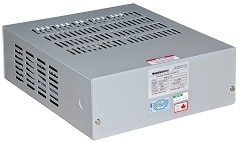
Please expand the following sections to get more details on the degrees of enclosure protection we offer.[/vc_column_text][mk_toggle title=”NEMA 1 (IP20)”]Enclosures constructed for indoor use to provide a degree of protection to personnel against access to hazardous parts and to provide a degree of protection of the equipment inside the enclosure against ingress of solid foreign objects (falling dirt).
IP20
Protected against solid foreign objects of 12.5mm in diameter and greater. Not protected against water ingress.
 [/mk_toggle][mk_toggle title=”NEMA 3R (IP23)”]Enclosures constructed for either indoor or outdoor use to provide a degree of protection to personnel against access to hazardous parts; to provide a degree of protection of the equipment inside the enclosure against ingress of solid foreign objects (falling dirt); to provide a degree of protection with respect to harmful effects on the equipment due to the ingress of water (rain , sleet, snow); and that will be undamaged by the external formation of ice on the enclosure.
IP23
Protected against solid foreign objects of 12.5mm in diameter and greater.
Water falling as a spray at any angle up to 60° from the vertical shall have no harmful effect.
 [/mk_toggle][mk_toggle title=”NEMA 4 (IP 56)”]Enclosures constructed for either indoor or outdoor use to provide a degree of protection to personnel against access to hazardous parts; to provide a degree of protection of the equipment inside the enclosure against ingress of solid foreign objects (falling dirt and windblown dust); to provide a degree of protection with respect to harmful effects on the equipment due to the ingress of water (rain, sleet, snow, splashing water, and hose directed water); and that will be undamaged by the external formation of ice on the enclosure.
IP56
Ingress of dust is not entirely prevented, but it must not enter in sufficient quantity to interfere with the satisfactory operation of the equipment; complete protection against contact.
Water projected in powerful jets (12.5mm nozzle) against the enclosure from any direction shall have no harmful effects.
 [/mk_toggle][mk_toggle title=”NEMA 4X (IP 65/66)”]A NEMA 4X enclosure is the exact same as a NEMA 4 enclosure, except it is constructed with corrosion resistant materials such as Stainless Steel 316. This type of enclosure is highly recommended if you will be operating this product within 5 kilometres of salt water, or you anticipate any other corrosive environmental elements.[/mk_toggle][/vc_accordion_tab][vc_accordion_tab icon=”mk-moon-cube4″ title=”Material”][mk_toggle title=”Galvanized Steel”]A protective coating of zinc is applied to steel. The zinc provides cathodic protection due to its greater negative electrochemical potential, making it the metal of preference to be consumed (when rusting). It often shows an aesthetic feature known as spangle, crystallites inside the coating. All of our galvanized steel material meets specific ASTM coating standards.
The galvanized steel is then treated for painting with a non-metallic iron phosphate coating. This heavily improves paint adhesion and increases corrosion protection if the metal’s paint film is broken. After the steel has been phosphatized, it is then powder coated. Powder coating cures in heat, forming a “skin”. This creates a harder finish, tougher than conventional paint.
Galvanized steel is a generally cost-effective and reliable material to prevent corrosion and damage to your product.[/mk_toggle][mk_toggle title=”Stainless Steel”]The most widely used stainless steel is the “304” type, comprised of 18% chromium and 8% nickel. We also offer “316” and “316L” grade stainless steel, comprised of 18% chromium and 10% nickel.
Stainless steel is touted for its resistance to corrosion and staining, and low maintenance needs. If your product will be used in an environment subject to particular corrosive conditions then we recommend using stainless steel over galvanized steel.
Because stainless steel is comprised of chromium and nickel throughout the material itself, it provides corrosion resistance for a longer duration as it does not rely on a coating for protection. This leaves painting to be an an optional layer of protection. We generally use stainless steel unpainted unless otherwise specified.[/mk_toggle][mk_toggle title=”Anodized Aluminum”]Anodizing is a process used to increase the thickness of a natural oxide layer formed on the surface of metal. Aluminum when exposed to any gas containing oxygen at room temperature will form a surface layer of amorphous aluminum oxide, which is very effective against corrosion.
We recommend anodized aluminum if you have specific corrosive conditions that are not or cannot be met by stainless steel. It is a very effective method of protecting against certain corrosive conditions.[/mk_toggle][/vc_accordion_tab][vc_accordion_tab icon=”mk-moon-upload” title=”Bushings”][vc_column_text disable_pattern=”false”]Porcelain electrical bushings are used to provide neutral and/or ground connection terminals outside the resistor enclosure. Bushings are insulated devices that allow electrical conductors to pass safely through a barrier, they do this by controlling the shape and strength of the electrical field produced by the electrical charge.
Ground and neutral bushings can be placed either at the top of the resistor enclosure or outside of a side panel for connection to external terminals or instruments where most convenient.
 [/vc_column_text][/vc_accordion_tab][vc_accordion_tab icon=”mk-moon-anchor” title=”Mounting”][vc_column_text disable_pattern=”false”]Depending on their size and use, enclosures can be designed to be mounted in one of two ways:
- Floor-mounted
- Wall-mounted
In addition to this, if you are separating your resistor and control enclosures, you have an additional option for the control enclosure. Control enclosures may be adjacently attached to the resistor enclosure. We can provide mounting stands and brackets if required.[/vc_column_text][/vc_accordion_tab][vc_accordion_tab icon=”mk-icon-paint-brush” title=”Paint”][vc_column_text disable_pattern=”false”]All of our product enclosures come with a standard ANSI 61 Gray, equivalent to RAL 7042.
We are happy to provide most standard RAL paint colors. If you are looking for a custom painted enclosure, please view out this reference chart to find a RAL code that meets your needs.[/vc_column_text][/vc_accordion_tab][/vc_accordions][/vc_column][/vc_row][vc_row][vc_column][mk_ornamental_title text_color=”#000000″ font_family=”Roboto+Slab” font_type=”google” font_size=”24″ font_weight=”500″ ornament_style=”lemo-single” ornament_color=”#d8d8d8″ ornament_thickness=”0″ margin_bottom=”0″]Necessary Components[/mk_ornamental_title][vc_accordions style=”simple-style” action_style=”toggle-action” open_toggle=”-1″ container_bg_color=”#ffffff” responsive=”false”][vc_accordion_tab icon=”mk-moon-aid” title=”Ground Fault Protection Relays”][vc_column_text]Ground fault relays are used to detect when the ground fault current reaches one or multiple programmed thresholds. As a result an alarm or trip can be initiated immediately or with a programmed delay. They are differentiated primarily upon their support for different grounding methods, their interfacing, and features.
| Model # | SE325 | RC48N | SE330 | SE701 | CME420 | RCM420 | EL731 | RCMS460 | RCMS490 | |
| Manufacturer | Littelfuse | Bender | Littelfuse | Littelfuse | Bender | Bender | Littelfuse | Bender | Bender | |
| Price | [mk_font_icons icon="mk-icon-dollar" color="#42b538" margin_horizental="0" margin_vertical="0" align="left"][mk_font_icons icon="mk-icon-dollar" color="#42b538" margin_horizental="0" margin_vertical="0" align="left"] | [mk_font_icons icon="mk-icon-dollar" color="#42b538" margin_horizental="0" margin_vertical="0" align="left"][mk_font_icons icon="mk-icon-dollar" color="#42b538" margin_horizental="0" margin_vertical="0" align="left"] | [mk_font_icons icon="mk-icon-dollar" color="#42b538" margin_horizental="0" margin_vertical="0" align="left"][mk_font_icons icon="mk-icon-dollar" color="#42b538" margin_horizental="0" margin_vertical="0" align="left"][mk_font_icons icon="mk-icon-dollar" color="#42b538" margin_horizental="0" margin_vertical="0" align="left"] | [mk_font_icons icon="mk-icon-dollar" color="#42b538" margin_horizental="0" margin_vertical="0" align="left"] | [mk_font_icons icon="mk-icon-dollar" color="#42b538" margin_horizental="0" margin_vertical="0" align="left"] | [mk_font_icons icon="mk-icon-dollar" color="#42b538" margin_horizental="0" margin_vertical="0" align="left"] | [mk_font_icons icon="mk-icon-dollar" color="#42b538" margin_horizental="0" margin_vertical="0" align="left"][mk_font_icons icon="mk-icon-dollar" color="#42b538" margin_horizental="0" margin_vertical="0" align="left"] | [mk_font_icons icon="mk-icon-dollar" color="#42b538" margin_horizental="0" margin_vertical="0" align="left"][mk_font_icons icon="mk-icon-dollar" color="#42b538" margin_horizental="0" margin_vertical="0" align="left"] | [mk_font_icons icon="mk-icon-dollar" color="#42b538" margin_horizental="0" margin_vertical="0" align="left"][mk_font_icons icon="mk-icon-dollar" color="#42b538" margin_horizental="0" margin_vertical="0" align="left"] | |
| System Type | Low Resistance | [mk_font_icons icon="mk-moon-checkmark-3" color="#42b538" margin_horizental="0" margin_vertical="0" align="left"] | [mk_font_icons icon="mk-moon-checkmark-3" color="#42b538" margin_horizental="0" margin_vertical="0" align="left"] | [mk_font_icons icon="mk-moon-checkmark-3" color="#42b538" margin_horizental="0" margin_vertical="0" align="left"] | [mk_font_icons icon="mk-moon-checkmark-3" color="#42b538" margin_horizental="0" margin_vertical="0" align="left"] | [mk_font_icons icon="mk-moon-checkmark-3" color="#42b538" margin_horizental="0" margin_vertical="0" align="left"] | ||||
| High Resistance | [mk_font_icons icon="mk-moon-checkmark-3" color="#42b538" margin_horizental="0" margin_vertical="0" align="left"] | [mk_font_icons icon="mk-moon-checkmark-3" color="#42b538" margin_horizental="0" margin_vertical="0" align="left"] | [mk_font_icons icon="mk-moon-checkmark-3" color="#42b538" margin_horizental="0" margin_vertical="0" align="left"] | [mk_font_icons icon="mk-moon-checkmark-3" color="#42b538" margin_horizental="0" margin_vertical="0" align="left"] | [mk_font_icons icon="mk-moon-checkmark-3" color="#42b538" margin_horizental="0" margin_vertical="0" align="left"] | [mk_font_icons icon="mk-moon-checkmark-3" color="#42b538" margin_horizental="0" margin_vertical="0" align="left"] | [mk_font_icons icon="mk-moon-checkmark-3" color="#42b538" margin_horizental="0" margin_vertical="0" align="left"] | [mk_font_icons icon="mk-moon-checkmark-3" color="#42b538" margin_horizental="0" margin_vertical="0" align="left"] | [mk_font_icons icon="mk-moon-checkmark-3" color="#42b538" margin_horizental="0" margin_vertical="0" align="left"] | |
| Response Values | Measuring Channels | 1 | 1 | 1 | 1 | 1 | 1 | 1 | 12 | 12 |
| Main Alarm | 0.5-4 A | 0.1-10 A | 0-100% of CT | 0-100% of CT | 0.05-16 A | 0-16 A | 0-5 A | 0-20 A | 0-20 A | |
| Prewarning | 0-100% of main | 0-100% of main | 0-100% of main | 0-100% of main | 0-100% of main | 0-100% of main | 0-100% of main | |||
| Time Delays | Trip response delay | 0.1-2 secs | 0.1-2 secs | 0.1-10 secs | 0.05-2.5 secs | 0-99 secs | 0-99 secs | 0.1-2 secs | 0-99 secs | 0-99 secs |
| Interfacing | Output contacts | 1 | 2 | 3 | 1 | 2 | 2 | 3 | 2 | 14 |
| Analog contacts | [mk_font_icons icon="mk-moon-checkmark-3" color="#42b538" margin_horizental="0" margin_vertical="0" align="left"] | [mk_font_icons icon="mk-moon-checkmark-3" color="#42b538" margin_horizental="0" margin_vertical="0" align="left"] | [mk_font_icons icon="mk-moon-checkmark-3" color="#42b538" margin_horizental="0" margin_vertical="0" align="left"] | [mk_font_icons icon="mk-moon-checkmark-3" color="#42b538" margin_horizental="0" margin_vertical="0" align="left"] | ||||||
| Communication protocol | [mk_font_icons icon="mk-moon-checkmark-3" color="#42b538" margin_horizental="0" margin_vertical="0" align="left"] | [mk_font_icons icon="mk-moon-checkmark-3" color="#42b538" margin_horizental="0" margin_vertical="0" align="left"] | [mk_font_icons icon="mk-moon-checkmark-3" color="#42b538" margin_horizental="0" margin_vertical="0" align="left"] | [mk_font_icons icon="mk-moon-checkmark-3" color="#42b538" margin_horizental="0" margin_vertical="0" align="left"] | ||||||
| Features | Data logging | [mk_font_icons icon="mk-moon-checkmark-3" color="#42b538" margin_horizental="0" margin_vertical="0" align="left"] | [mk_font_icons icon="mk-moon-checkmark-3" color="#42b538" margin_horizental="0" margin_vertical="0" align="left"] | [mk_font_icons icon="mk-moon-checkmark-3" color="#42b538" margin_horizental="0" margin_vertical="0" align="left"] | [mk_font_icons icon="mk-moon-checkmark-3" color="#42b538" margin_horizental="0" margin_vertical="0" align="left"] | |||||
| Harmonic filtering | [mk_font_icons icon="mk-moon-checkmark-3" color="#42b538" margin_horizental="0" margin_vertical="0" align="left"] | [mk_font_icons icon="mk-moon-checkmark-3" color="#42b538" margin_horizental="0" margin_vertical="0" align="left"] | [mk_font_icons icon="mk-moon-checkmark-3" color="#42b538" margin_horizental="0" margin_vertical="0" align="left"] | [mk_font_icons icon="mk-moon-checkmark-3" color="#42b538" margin_horizental="0" margin_vertical="0" align="left"] | [mk_font_icons icon="mk-moon-checkmark-3" color="#42b538" margin_horizental="0" margin_vertical="0" align="left"] | [mk_font_icons icon="mk-moon-checkmark-3" color="#42b538" margin_horizental="0" margin_vertical="0" align="left"] | ||||
| Resistor monitoring | [mk_font_icons icon="mk-moon-checkmark-3" color="#42b538" margin_horizental="0" margin_vertical="0" align="left"] | [mk_font_icons icon="mk-moon-checkmark-3" color="#42b538" margin_horizental="0" margin_vertical="0" align="left"] | [mk_font_icons icon="mk-moon-checkmark-3" color="#42b538" margin_horizental="0" margin_vertical="0" align="left"] | |||||||
| Password protection | [mk_font_icons icon="mk-moon-checkmark-3" color="#42b538" margin_horizental="0" margin_vertical="0" align="left"] | [mk_font_icons icon="mk-moon-checkmark-3" color="#42b538" margin_horizental="0" margin_vertical="0" align="left"] | [mk_font_icons icon="mk-moon-checkmark-3" color="#42b538" margin_horizental="0" margin_vertical="0" align="left"] | [mk_font_icons icon="mk-moon-checkmark-3" color="#42b538" margin_horizental="0" margin_vertical="0" align="left"] | [mk_font_icons icon="mk-moon-checkmark-3" color="#42b538" margin_horizental="0" margin_vertical="0" align="left"] | [mk_font_icons icon="mk-moon-checkmark-3" color="#42b538" margin_horizental="0" margin_vertical="0" align="left"] | ||||
| Feeder monitoring | [mk_font_icons icon="mk-moon-checkmark-3" color="#42b538" margin_horizental="0" margin_vertical="0" align="left"] | [mk_font_icons icon="mk-moon-checkmark-3" color="#42b538" margin_horizental="0" margin_vertical="0" align="left"] | ||||||||
| Feeder tripping | [mk_font_icons icon="mk-moon-checkmark-3" color="#42b538" margin_horizental="0" margin_vertical="0" align="left"] | |||||||||
| CT | CT monitoring | [mk_font_icons icon="mk-moon-checkmark-3" color="#42b538" margin_horizental="0" margin_vertical="0" align="left"] | [mk_font_icons icon="mk-moon-checkmark-3" color="#42b538" margin_horizental="0" margin_vertical="0" align="left"] | [mk_font_icons icon="mk-moon-checkmark-3" color="#42b538" margin_horizental="0" margin_vertical="0" align="left"] | [mk_font_icons icon="mk-moon-checkmark-3" color="#42b538" margin_horizental="0" margin_vertical="0" align="left"] | [mk_font_icons icon="mk-moon-checkmark-3" color="#42b538" margin_horizental="0" margin_vertical="0" align="left"] | ||||
| Compatible CTs | CT-200 | W Series | CT200 | EFCT Series | Standard XX/5A | W Series | EFCT Series | W/WAB Series | W/WAB Series | |
| Cross Ref. | i-Gard | GFR-RM | GFR-RM | GFR-RM | mGARD-10 | mGARD-10 | Exceeds mGARD-10 | Multi mGARD-10 | Multi mGARD-10 |
They are used to enable connected metering (for example protective relays or ammeters). The current transformer safely isolates measurement and control circuitry from the high voltages typically present on the circuit being measured.[/vc_column_text][mk_toggle title=”How CTs work”]Current transformers are often constructed by passing one or more primary turns (either an insulated cable or an uninsulated bus bar) through an insulated toroidal core wrapped with many turns of wire. The CT is typically described by its current ratio from primary to secondary. For example, a 400:5 CT would provide an output current of 5 amperes with a primary current of 400 amperes… in other words: a current of 400 Amps goes in, and 5 Amps comes out.[/mk_toggle][mk_toggle title=”How to select a CT”]
- Determine which relay you need your resistor connected to.
- Determine the current needed for the relay.
- Determine the initial current rating for the resistor.
- Select a CT that is rated for the primary and secondary currents.
- CT200
- EFCT
- 5SHT
- W Series
- WAB Series
We can also provide CTs for any custom application, or specs, from any manufacturer. The listed CTs are the most common, and compatible with the ground fault protection relays we commonly use.[/mk_toggle][/vc_accordion_tab][vc_accordion_tab icon=”mk-moon-stairs-down-2″ title=”Neutral Grounding Transformers”][mk_toggle title=”Why are Neutral Grounding Transformers used?”]In a three phase power system, there are two common configurations. A wye configuration, and a delta configuration. In a delta configuration, there is no common “star point” where each line is connected. In a wye configuration, there is a common star point, and quite often there is also a dedicated neutral line. In order for a Neutral Grounding Resistor to do its job, it must be connected to a Neutral, in order to Ground it through Resistance. A neutral grounding / earthing transformer will either create this neutral connection, or it will change its voltage to make it suitable for usage in the NGR.
 [/mk_toggle][mk_toggle title=”Application and Types of Neutral Grounding Transformers”]There are two main types of earthing / grounding transformers:
- Zig-Zag Transformer:
- Creates a neutral connection from a delta configuration
- For more detailed information on HOW Zig-Zag transformers work, visit [our guide].
- Potential Transformer:
- Changes the supply voltage (line-to-neutral)
- Also known as a voltage transformer
- Two sub-types
- Step-Down Transformer: reduces the supply voltage
- Step-Up Transformer: increases the supply voltage (exceptionally rare usage)
- For more detailed information on HOW potential transformers work, visit [our guide].
If you are using a Delta configuration, you MUST use a Zig-Zag transformer to connect your Neutral Grounding Resistor. In addition to the Zig-Zag transformer, you can connect a Potential Transformer to your newly formed neutral connection.
If you already have a Neutral line or connection, why would you want a Potential Transformer?
The simple answer is to enable high resistance grounding systems. For example, if you wanted to take advantage of pulsing systems, but your line-to-neutral voltage is high, it would be exceptionally expensive to create a high resistance system.
You can reduce the line-to-neutral voltage with the use of a potential transformer, specifically a step-down transformer. This voltage will be the new supply voltage of the Neutral Grounding Resistor, and allow you to use high-resistance-only features and be significantly more cost effective.
For more information on high resistance grounding vs. low resistance grounding, read our useful information section below.[/mk_toggle][mk_toggle title=”How can we help?”]We want to bring you the solution that best meets your requirements, and does so most cost-effectively. If you provide us with your specifications, we will deliver this solution. This may mean just the use of a zig-zag transformer, or a potential transformer, or a combination of both with our Neutral Grounding Resistors.
Alternatively, if you already have a visualization of your solution, provide us your specifications and we’ll make sure you have a fully configured system ready to be connected.[/mk_toggle][mk_toggle title=”Other common names and references”]Due to regional differences, analogous to Neutral Grounding vs. Neutral Earthing, customers frequently search for earthing transformers, or grounding transformers. These two words refer to the exact same product.
Because we are based in Canada, we frequently refer to these products as grounded, or grounding transformers. Many European and Asian countries will commonly refer to them as an earthing transformer. For short, sometimes these are also referred to as NGR Transformers, or NER transformers.
If you are a customer and are reading this section, you are probably here for one of three reasons.
- You started out knowing you needed an earthing transformer / grounding transformer for your three phase system, and are looking for transformer grounding. Specifically a transformer resistor.
- You know you needed a Neutral Grounding Resistor, and need to use a ground transformer in order to use an NGR.
- You want to understand when and why a Neutral Earthing or Neutral Grounding transformer with an NGR / NER.
In any case, you’ve find the right place.[/mk_toggle][/vc_accordion_tab][/vc_accordions][mk_divider style=”thin_solid” thin_single_color=”#2289d8″ thickness=”2″ margin_top=”40″ margin_bottom=”30″][/vc_column][/vc_row][vc_row][vc_column width=”5/6″][mk_ornamental_title text_color=”#000000″ font_family=”Roboto+Slab” font_type=”google” font_size=”24″ font_weight=”500″ ornament_style=”lemo-single” ornament_color=”#d8d8d8″ ornament_thickness=”0″ margin_bottom=”0″]Useful Information[/mk_ornamental_title][vc_accordions style=”simple-style” action_style=”toggle-action” open_toggle=”-1″ container_bg_color=”#ffffff” responsive=”false”][vc_accordion_tab title=”How do Neutral Grounding Resistors work?”][vc_column_text]On a fundamental level, the Neutral Grounding Resistor is an assembly of elements designed to maintain ground fault currents within safe limits.[/vc_column_text][mk_image src=”http://720.697.myftpupload.com/wp-content/uploads/2017/06/ngr-schematic-v5.svg” image_size=”full” svg=”true” target=”_blank”][mk_toggle title=”Understanding this diagram”]The above MegaResistors diagram displays how Neutral Grounding Resistors work in a system, and how their functionality can be extended.
- Neutral Grounding Resistors are used in general to ground Transformers or Generators with Delta or Wye secondaries.
- If Delta, a Neutral Grounding Transformer is used to create a Neutral point.
- In both cases, a Neutral Grounding Transformer can be used to reduce the voltage applied to the NGR.
- The NGR is connected to the neutral point and can have additional features such as:
- Sensing resistors, allow resistor monitoring.
- Bushings, allow for ease of connection with external ground and neutral insulated conductors.
- Pulsing resistors, speed up the location of the ground fault.
- Other components, such as a disconnect switch.
- The neutral is passed through a current transformer, which will be connected to a ground fault protection relay.
- The relay has the primary function of detecting ground faults.
- Detected values can be displayed on metering devices (Ammeter, Voltmeters).
- If a ground fault is detected…
- Low resistance: The relay will trips the breaker.
- High resistance: The relay will activate an alarm, there is no need to trip.
- The relay can also send information to the logic controller if using second ground fault protection.
- Lamps on the control panel provide important information from the relay.
- There are numerous functions on the control panel that allow staff to control the system.
- One of these functions is the pulsing system, which activates the pulsing resistor.
- If using second ground fault protection, the logic controller will control and assign priorities to feeders.
- It will send commands to the relays to control the system.
- It will send information to the control panel to display.
Anything in the low resistance bracket shows what a low resistance system is capable of. Anything in the high resistance bracket shows what a high resistance system is capable of.
These features and components can be enclosed in two separate (resistor and controls) enclosure, or in a single enclosure. Depending on the voltage class, or if using a second ground fault protection system, only separate enclosures are allowed.[/mk_toggle][/vc_accordion_tab][vc_accordion_tab title=”Grounding types comparison”][mk_toggle title=”High Resistance vs. Low Resistance”]Low Resistance Grounding Systems (LRGs) and High Resistance Grounding Systems (HRGs) are both subsets of Neutral Grounding Resistors. The primary difference between them is their Duty Rating, and the functions they can deploy as a result of their duty rating.
LRGs are designed to trip the system within a specific amount of time (duty rating). Most Neutral Grounding Resistors are designed to trip within 10, 30, or 60 seconds. Typically this can allow time to softly shutdown any sensitive equipment to prevent damage, by notifying an immediate area with the sound of a horn.
HRGs are designed to maintain continuous operation of the system without interruption! A ground fault can cause hours of downtime resulting in the loss of hundreds to millions of dollars depeneding on your application, a HRGs prevents this. The duty rating for all HRGs are “Continuous”, and not specified with time.
In addition to the massive advantage of preventing any interruption, HRGs are capable of supporting many useful features. Because the HRGs maintains a relatively low current (5A or 10A), it is capable of using a pulsing system to help you quickly detect the exact location of a ground fault and alleviate the issue. In addition to this, a HRGs is needed for feeder monitoring or second ground fault protection, two very advanced features. For more information on second ground fault protection, click [here].
There is one minor downside to HRGs; supporting very high voltages (above 600V) results in significantly increased costs. If you are interested in maintaining continous operations and using HRGs-only features, you can use a Neutral Grounding Transformer in conjunction.[/mk_toggle][mk_toggle title=”Comparison Chart – Ungrounded, Solid, Low, High”]
| Ungrounded | Solid Grounding | Low Resistance | High Resistance | |
|---|---|---|---|---|
| Ground fault current | Very low | Very high | Medium | Very low |
| Damage energy | Low | Very high | High | Low |
| Transient overvoltages | High | Low | Low | Low |
| Equipment burndown | Reduced | Higher | Reduced | Reduced |
| Fault location | Difficult | Easy | Easy | Very easy |
| Service continuity | Good | Bad | Bad | Better |
| Multiple faults | Often | Very rare | Very rare | Rare |
| Isolation of the ground fault | Delayed | Immediate | Immediate | Delayed |
| Flash hazard during ground fault | High | High | Medium | Minimum |
| Serve line-to-neutral loads | No | Yes | No | No |
| Relaying coordination | Bad | Good | Better | Best |
| L-N Voltage (Volts) | Initial Current (Amps) | Duty Cycle |
|---|---|---|
| 277 | 1 | Continuous |
| 277 | 2 | Continuous |
| 277 | 3 | Continuous |
| 277 | 5 | Continuous |
| 277 | 10 | Continuous |
| 347 | 1 | Continuous |
| 347 | 2 | Continuous |
| 347 | 3 | Continuous |
| 347 | 5 | Continuous |
| 347 | 10 | Continuous |
| 1390 | 5 | Continuous |
| 1390 | 10 | Continuous |
| 1390 | 15 | Continuous |
| 1390 | 25 | Continuous |
| 1390 | 100 | 10 seconds |
| 1390 | 200 | 10 seconds |
| 1390 | 400 | 10 seconds |
| 2400 | 5 | Continuous |
| 2400 | 10 | Continuous |
| 2400 | 15 | Continuous |
| 2400 | 25 | Continuous |
| 2400 | 100 | 10 seconds |
| 2400 | 200 | 10 seconds |
| 2400 | 400 | 10 seconds |
| 2400 | 500 | 10 seconds |
| 2400 | 600 | 10 seconds |
| 4160 | 5 | Continuous |
| 4160 | 10 | Continuous |
| 4160 | 15 | Continuous |
| 4160 | 25 | Continuous |
| 4160 | 100 | 10 seconds |
| 4160 | 200 | 10 seconds |
| 4160 | 400 | 10 seconds |
| 4160 | 500 | 10 seconds |
| 4160 | 600 | 10 seconds |
| 8000 | 100 | 10 seconds |
| 8000 | 200 | 10 seconds |
| 8000 | 400 | 10 seconds |
| 8000 | 800 | 10 seconds |
| 8000 | 1000 | 10 seconds |
| 13200 | 100 | 10 seconds |
| 13300 | 200 | 10 seconds |
| 13300 | 400 | 10 seconds |
| 13300 | 800 | 10 seconds |
| 13300 | 1000 | 10 seconds |
The International Electrotechnical Commission (IEC) refer to this as Earthing. The Institute of Electrical and Electronics Engineers (IEEE) refer to this as Grounding. As a result, depending on where you are in the world and which standard is more dominant there, you’ll choose a different word for the same concept. Chances are, if you’re in the Western hemisphere you call it Grounding, if you’re in the Eastern hemisphere you call it Earthing.
On a technical level there is a small difference that makes the use of one term over the other more appropriate.
Earthing refers to removing the electrical charge from “dead” parts, meaning parts of the system that should not be affected by the current. For example, a metal enclosure made to be touched should not be part of a circuit that carries the electrical charge, ensuring that it is “earthed” means that no one will be shocked when they touch it.
Grounding refers to removing the electrical charge from “live” parts, parts of the system that SHOULD have the current running through them. In the context of NEUTRAL grounding resistors, this means removing the current from the Neutral.
—
In summary, whether you are searching for Earth Fault Protection, Neutral Earthing Resistor, Neutral Earth Resistor, or just Earthing Resistors, you’re on the right page.
Some other common terminology includes: Earth to Neutral Resistance, Earthed Neutral System, and Generator Neutral Earthing.
If you are trying to understand the advantages of earthing systems / grounding systems, please read the above section on Grounding types comparison.[/vc_column_text][/vc_accordion_tab][/vc_accordions][/vc_column][vc_column width=”1/6″][mk_ornamental_title text_color=”#000000″ font_family=”Roboto+Slab” font_type=”google” font_size=”24″ font_weight=”500″ ornament_style=”lemo-single” ornament_color=”#d8d8d8″ ornament_thickness=”0″ margin_bottom=”0″]Benefits[/mk_ornamental_title][mk_custom_list style=”mk-moon-arrow-up-4″ icon_color=”#42b538″ margin_bottom=”0″]
- Safety for personnel
- Life of equipment
- Service reliability
- Major expenses
- Frequency of faults
- Fault clearance time
- Risk of arc flashes
- Response time
- Over-voltages